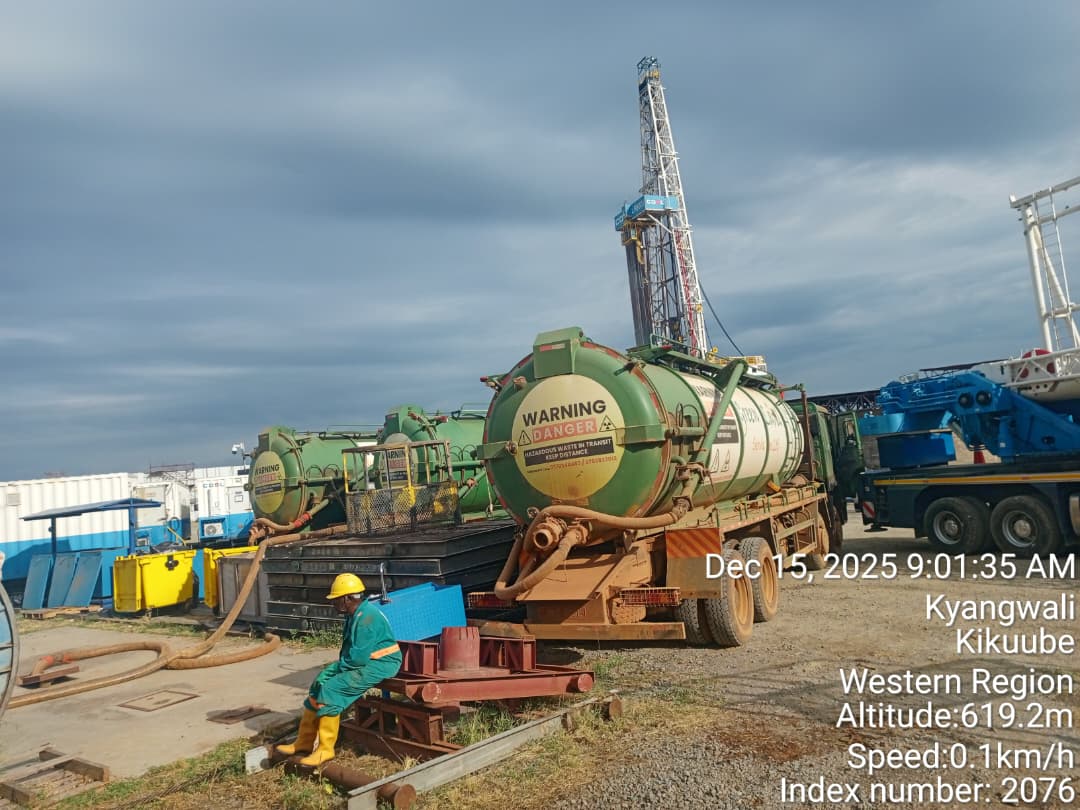
Uganda is on the brink of becoming an oil producing nation. Projects like Tilenga and Kingfisher in the Albertine Graben mark a major step forward, and the development of infrastructure such as the East African Crude Oil Pipeline is accelerating the transition from exploration to full scale production. With this progress comes a growing responsibility to manage environmental risks carefully, and one of the most complex areas is drilling waste.
Drilling operations generate several types of waste, each with its own challenges. The most significant by volume are drill cuttings, which are fragments of rock brought to the surface during drilling. Depending on the geology, these cuttings may contain hydrocarbons, naturally occurring radioactive material, or heavy metals. This makes proper testing and handling essential. In addition, drilling fluids, once they are no longer usable, become waste streams that require specific treatment based on their composition.
Uganda’s regulatory framework sets clear expectations for how this waste should be managed. It combines national environmental laws with oil and gas specific regulations, requiring operators to develop and implement Waste Management Plans as part of their environmental and social impact assessments. These plans are not just formalities. They must be actively followed and monitored throughout the drilling process.
Effective drilling waste management begins long before drilling starts. Decisions made at the well design stage have a direct impact on the type and volume of waste generated. For example, water based mud systems tend to produce waste that is easier to treat and dispose of compared to oil based systems, which require more intensive processing. Bringing waste management experts into early planning discussions leads to better outcomes than trying to solve problems after they arise.
On site, managing drill cuttings involves both equipment and treatment processes. Solids control systems such as shale shakers, desanders, desilters, and centrifuges help recover drilling fluids so they can be reused. At the same time, treatment methods such as thermal desorption, bioremediation, and stabilisation are used to reduce the environmental impact of the cuttings before disposal. The choice of method depends on the characteristics of the waste and the regulatory requirements.
Documentation plays a critical role throughout this process. Keeping accurate records of waste volumes, test results, treatment methods, and disposal routes is essential. It not only ensures compliance with regulators like NEMA and the Petroleum Authority of Uganda, but also helps operators track performance and identify issues early.
At Green Label Services Ltd, we provide integrated drilling waste management solutions tailored to Uganda’s oil and gas sector. Our services include waste characterisation, solids control support, treatment and disposal of drill cuttings, and full regulatory compliance assistance. We work closely with drilling teams to ensure that waste management is part of the operation from the very beginning.
As Uganda’s oil and gas industry grows, effective drilling waste management will be a key factor in ensuring that development is both responsible and sustainable. Getting it right from the start protects the environment, supports compliance, and strengthens the long term success of the sector.